On a formula sheet, a product is a list of ingredients and percentages. Turning that sheet into a tablet you can bottle and ship takes nine steps: weighing, milling, granulating and drying, sizing, blending, pressing, coating, sorting and inner packing. Each step deals with something a formula sheet can’t show: how the powder flows, how sticky it is, how much moisture it holds and how well it compresses.
Instead of theory, here is the process in order, with photos from Hilford’s own production floor.
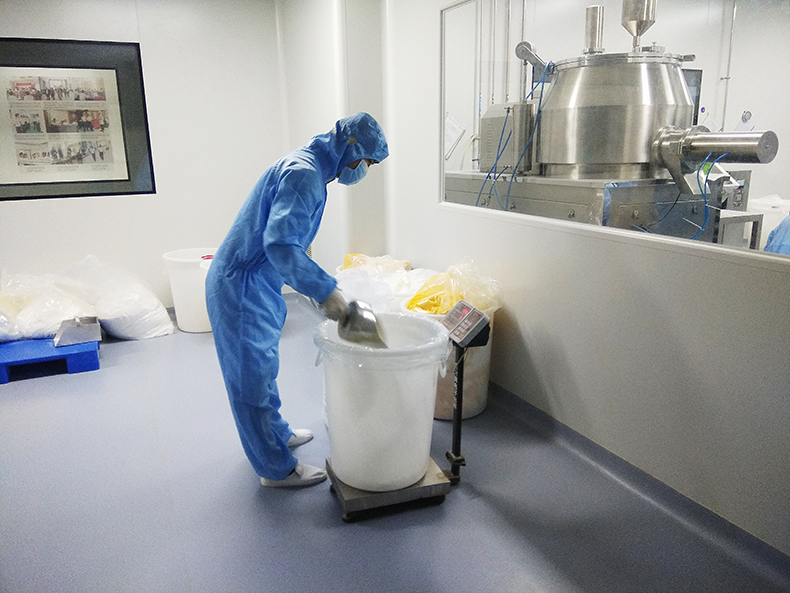
01Weighing: where every batch starts
Before production, each ingredient is weighed out to the formula ratio. Everything downstream depends on this step. If the weights are off, no amount of process control later will fix it.
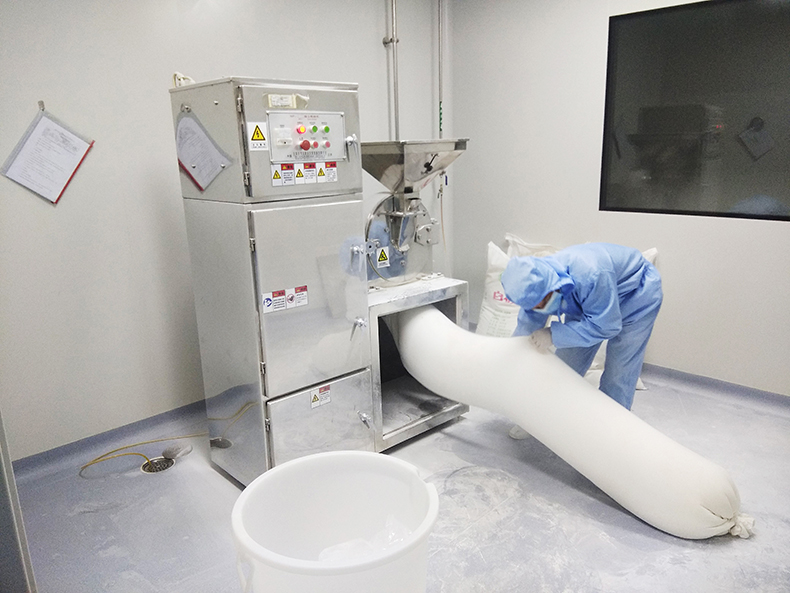
02Milling: getting particle size right
Some ingredients are milled before blending and granulation to bring their particle size into the right range. Uneven particle size makes granulation and pressing less stable.
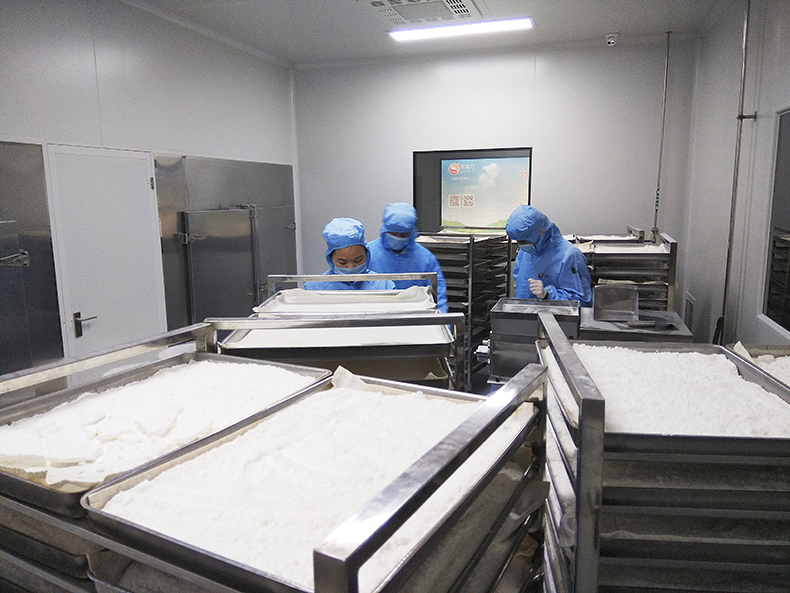
03Granulation and drying: turning powder into pressable granules
Most tablet formulas can’t be pressed straight from powder, because flow and compressibility aren’t reliable enough. Granulation turns the powder into granules, which are then dried to remove extra moisture so the material is ready to press.
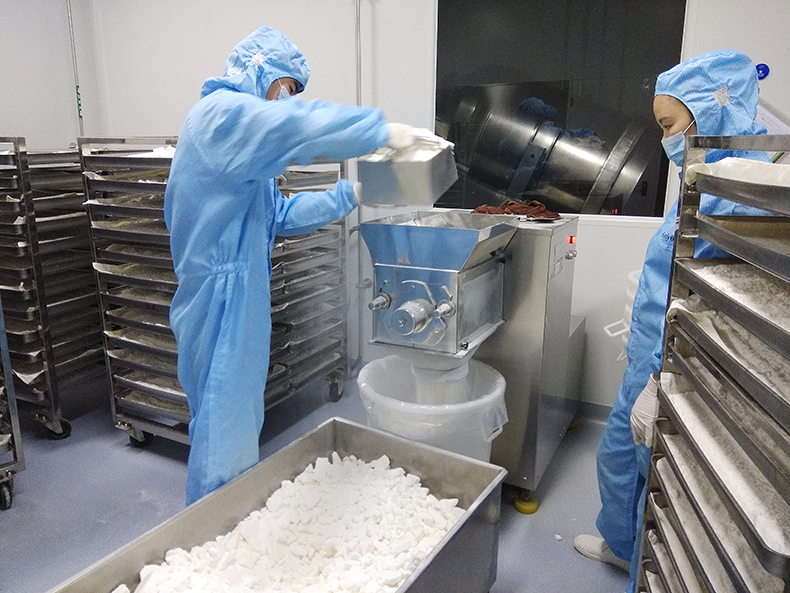
04Sizing: making granules uniform again
Dried granules come out uneven. Sizing breaks down the oversized ones and screens the batch so particle size is consistent again. That consistency is what keeps each tablet’s fill weight stable.
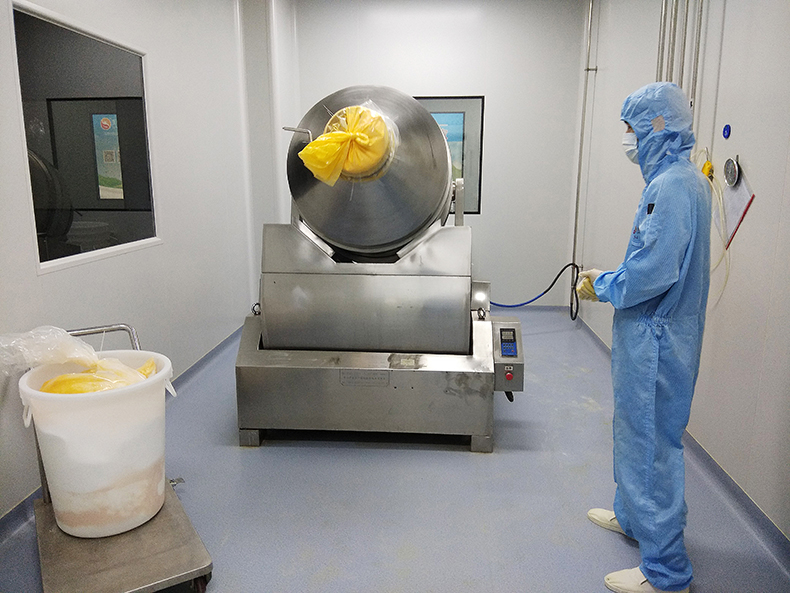
05Blending: adding the final excipients
The sized granules are blended with lubricants and other external excipients to make the final press-ready mix. How evenly this blends decides how consistent weight and content are from tablet to tablet.
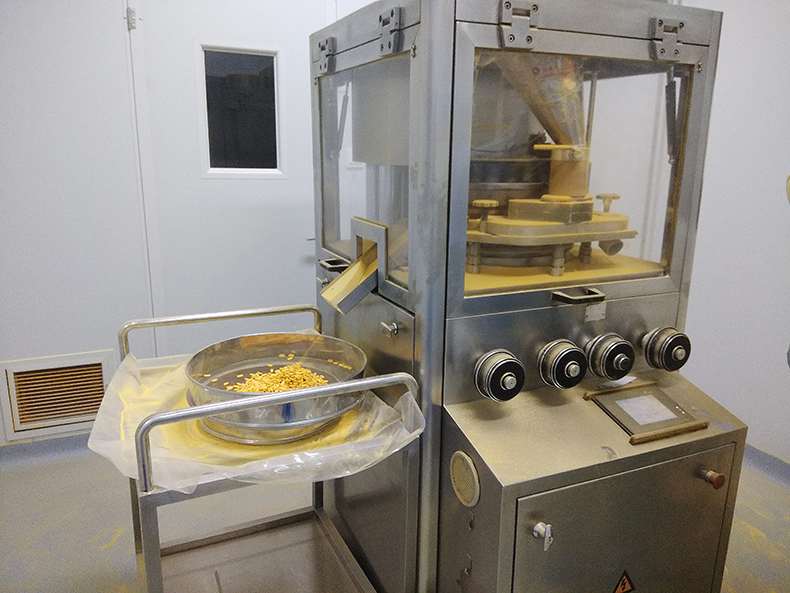
06Pressing: forming the tablet
The tablet press compresses the blend into shape. Punch shape and pressure settings decide the tablet’s look, hardness and how it breaks down. Every formula needs its own pressure settings, which is why setting up the press is different for each product.
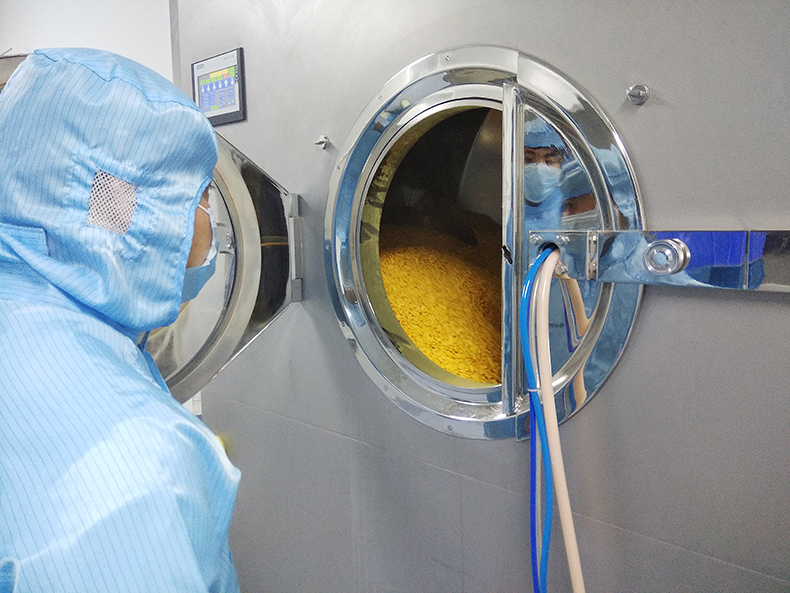
07Coating: not just for looks
Not every tablet needs a coating. Those that do go into a coating pan, which keeps turning so the coating solution spreads evenly over each tablet. A coating can mask taste, protect the core or control how fast the tablet breaks down, depending on the material and formula.
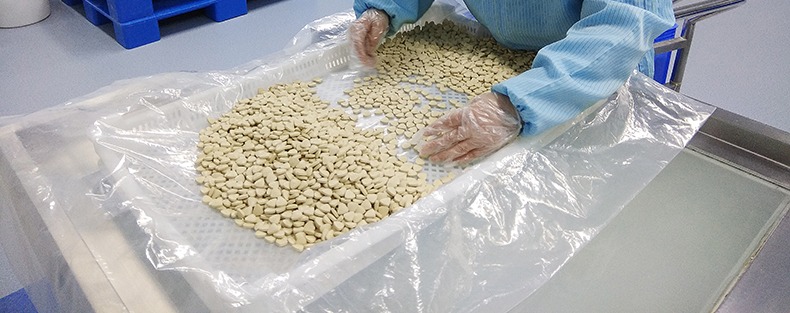
08Sorting: a visual check by hand
Alongside automated equipment, sorting still relies on people looking at the tablets and removing any that are broken, spotted or clearly the wrong size. This is a visual check only. It does not mean the batch has passed full quality release.
09Inner packing: the last step before packaging
Tablets that pass the visual check go into inner packing, usually bottles or pouches, ready for outer packaging and shipping. At this point the tablet itself is essentially finished.
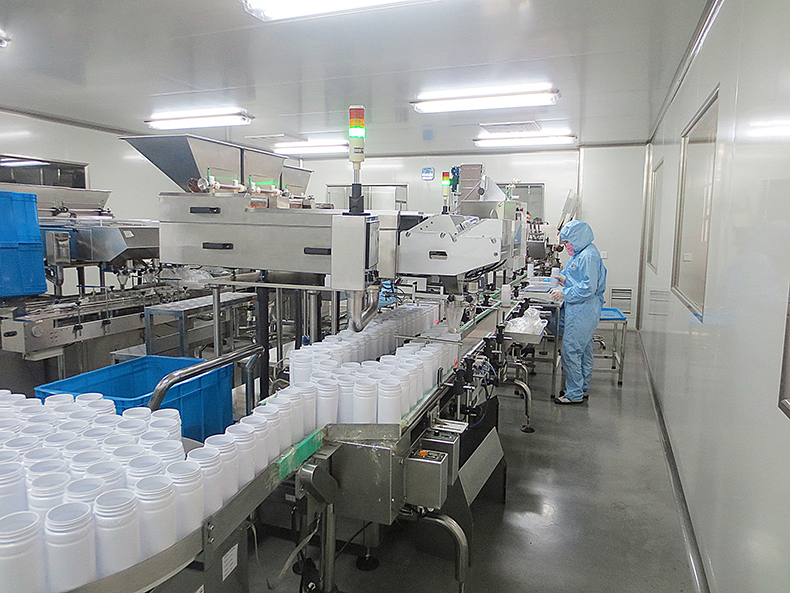
Nine steps decide whether it can be made consistently
The formula decides what goes into a product. These nine steps on the floor decide whether it can be made the same way, batch after batch. That’s why we’d rather show you the production floor than just talk about formulas and specs.